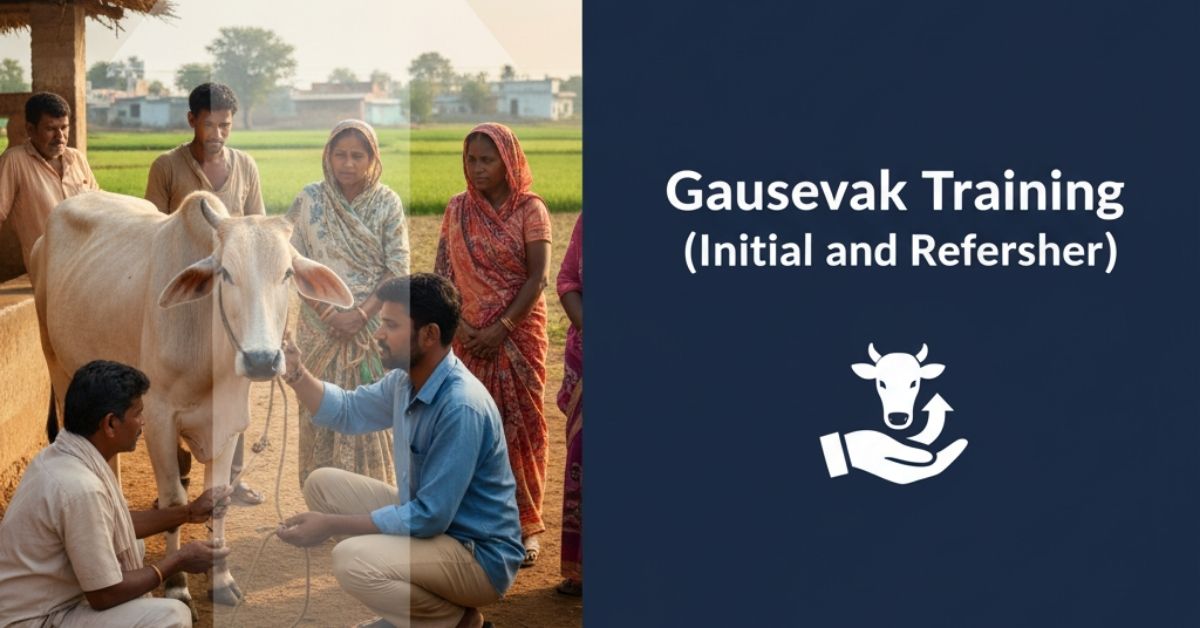
India has a long history of protecting cows, caring for them, and developing rural communities in an eco-friendly way. For centuries, cows have been associated not just with farming and dairy production, but also with cultural, environmental, and spiritual values. Today, many organisations and gaushalas across India are working to promote cow welfare and sustainable rural development. For this mission, they need people trained in responsible and scientific cow care.
To fulfil this need, many regions have launched Gausevak Training (Initial and Refresher) programmes. The goal is to teach individuals how to care for cows in a scientific, ethical and compassionate manner, while also creating opportunities for livelihood and community service.
This guide explains the purpose of Gausevak Training, how it is structured, syllabus details, benefits, job and seva opportunities, certification and long-term scope.
🌟 What is the purpose of Gausevak Training?
Gausevak Training is a structured learning programme that trains individuals to become Gausevaks — people skilled in cow care, gaushala management, rural sustainability, and activities related to protecting and productively utilising indigenous cows.
There are two levels of training:
1️⃣ Initial Gausevak Training
For beginners who have little or no experience in cow care or gaushala management.
2️⃣ Refresher Gausevak Training
For individuals who have already completed the initial training and want to:
- Learn advanced techniques
- Upgrade scientific knowledge
- Improve management and operational skills
Together, these programmes strengthen both the volunteer and professional workforce in the cow welfare ecosystem.
🎯 Goals of Gausevak Training
The programme aims to:
- Teach scientific and ethical cow care
- Provide trained manpower for gaushalas and livestock projects
- Protect and promote indigenous Indian cow breeds
- Train individuals in sustainable cow-based products
- Encourage rural self-employment and entrepreneurship
- Promote compassion and service toward animals
The training supports both livelihood development and community service.
👨🏫 Who Can Join?
Gausevak Training is open to:
- Students and youth interested in rural development and animal care
- Gaushala workers and volunteers
- Farmers and dairy workers
- Women SHGs and rural entrepreneurs
- Individuals interested in eco-friendly livelihood models
- Social workers and community activists
- Anyone passionate about cow welfare
No formal degree is usually required — people from all backgrounds can participate.
📌 Structure of the Training
🟢 Initial Gausevak Training
Duration: 5 to 30 days (varies by institute)
Topics covered:
- Basics of cow behaviour and welfare
- Hygiene and shelter management
- Feeding and watering routines
- Calf care and pregnant cow care
- First-aid basics
- Daily routines inside a gaushala
- Roles and responsibilities of a Gausevak
🔵 Refresher Gausevak Training
Duration: 3 to 15 days
Topics covered:
- Updated scientific knowledge
- Disease prevention and veterinary coordination
- Fodder cultivation, nutrition and herbal supplements
- Advanced panchgavya product development
- Professional gaushala administration
- Planning sustainable revenue models
After completing refresher training, individuals become highly skilled and employment-ready in the cow welfare sector.
📚 Detailed Syllabus Overview
While modules vary by institution, the general syllabus includes:
🐄 Cow Care & Management
- Characteristics of indigenous breeds
- Identifying cow stress signals
- Handling cows safely and lovingly
🏡 Shelter & Hygiene
- Space requirements
- Roofing, flooring and drainage standards
- Sanitisation techniques
🌿 Feeding & Nutrition
- Balanced diet planning
- Dry vs. green fodder
- Water scheduling and mineral mixtures
🩺 Health Care & First Aid
- Signs of illness
- Common diseases and prevention
- Vaccination schedule
- Emergency response and record maintenance
👶 Special Needs Care
- Newborn calf care
- Pregnant and lactating cow care
- Senior cow care
🧴 Panchgavya Products and Value Addition
- Ghee, dung logs, dhoop sticks, phenyl, soaps etc.
- Entrepreneurship ideas and business models
📊 Gaushala Administration
- Budgeting and cost optimisation
- Volunteer and worker management
- Community support and fundraising
🌍 Environmental & Social Impact
- Natural farming and cow-based fertilisers
- Organic agriculture practices
- Rural employment and community development
💰 Livelihood and Career Opportunities
Gausevak Training opens doors to multiple income-based and service-based pathways.
Job Opportunities
- Gaushala caretaker or supervisor
- Dairy farm assistant or manager
- Natural farming trainer
- Panchgavya production unit worker
- Staff or volunteer at animal welfare organisations
Entrepreneurship & Self-Employment
Trained participants can start:
- Organic farming consultancy
- Cow-based product manufacturing units
- Natural fertiliser production (Gobar-Khada, Jeevamrut, etc.)
- Rural vocational training centres
Community Seva Opportunities
Graduates can conduct awareness and training sessions for:
- Schools and colleges
- Farmers and rural communities
- Animal welfare groups
Thus, the programme supports employment, entrepreneurship and community service.
🎓 Certificates and Recognition
Participants receive:
- Training Completion Certificate (Initial programme)
- Skill-Upgradation Certificate (Refresher programme)
These certifications:
- Build credibility for employment in gaushalas and animal welfare organisations
- Support entrepreneurship projects and donation drives
- Improve future career prospects in the cow-care sector
❤️ Values and Spiritual Connection
For many people in India, cow service (Gauseva) is not just work — it is spiritual devotion.
The training nurtures:
- Compassion
- Patience
- Discipline
- Service mindset
It strengthens the emotional, spiritual and environmental connection between humans, animals and nature.
🔄 Why Refresher Training Matters
Cow-care practices evolve over time. Refresher training ensures that Gausevaks stay updated on:
- New scientific feeding and healthcare techniques
- Modern veterinary practices
- Sustainable models for gaushala business
- Integration of cows with natural farming systems
Continuous learners eventually become leaders and trainers in the Gauseva ecosystem.
💡 Tips to Succeed in Gausevak Training
- Observe cows quietly — observation teaches more than theory
- Ask questions and learn from senior caretakers
- Maintain a daily logbook of routines and feed quantity
- Practice teamwork — helping and asking help improves learning
- Stay physically active and emotionally calm
- Treat cows with patience — never force or shout
- Focus on long-term consistency rather than quick results
🧘 Personal Growth Through the Training
Participants often share that the programme:
- Builds discipline and self-confidence
- Improves physical activity and wellness
- Cultivates empathy and emotional balance
- Provides a sense of purpose
- Strengthens leadership and social skills
Growth happens not only in technical skills, but also in mindset and personality.
🏁 Final Thoughts
The Gausevak Training (Initial and Refresher) is not just a technical course.
It is a movement for:
- Compassionate cow welfare
- Eco-friendly rural development
- Sustainable and natural farming
- Livelihood generation
- Cultural and environmental harmony
Whether someone wants to work in a gaushala, start a rural business, support organic farming, or simply perform meaningful seva, Gausevak Training provides a strong foundation.
If you care about cow welfare, sustainability, community development or eco-friendly livelihoods — this training can positively transform your life and the lives of many animals and people.
Serving cows is not just a task —
✨ It is a duty, a devotion, and a powerful way to serve society.