India is quickly becoming a digital economy, and technology is now central to growth in every sector — business, education, healthcare, governance, agriculture and communication.
However, a digitally empowered future is only possible if every citizen has the skills to use digital tools confidently.
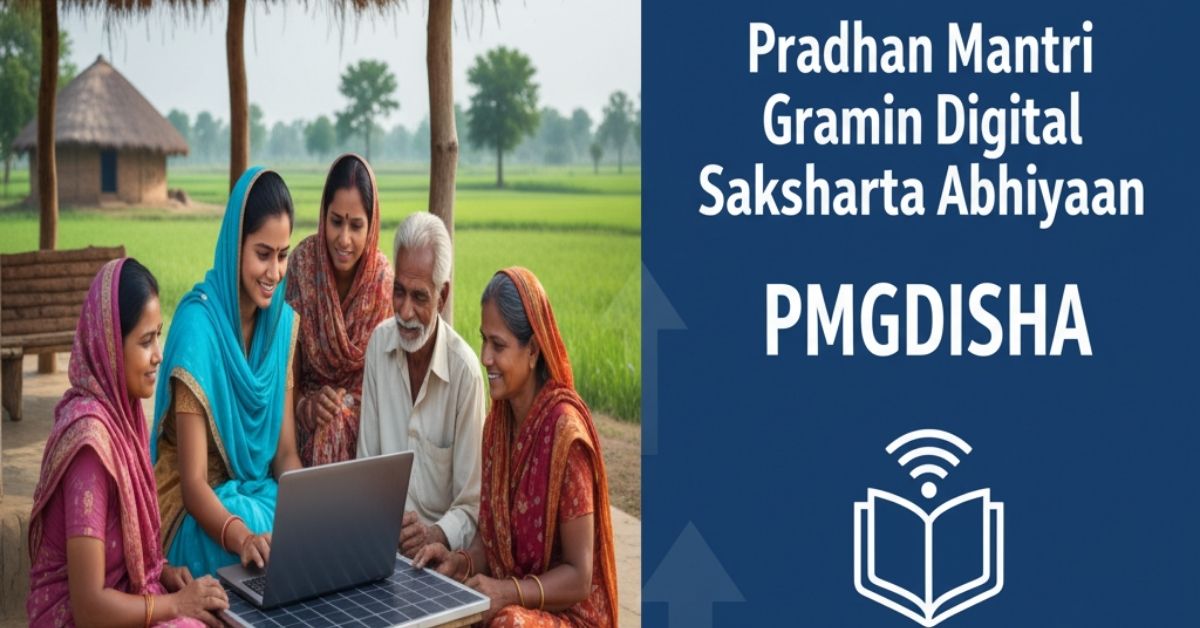
To achieve this, the Government of India launched the Pradhan Mantri Gramin Digital Saksharta Abhiyaan (PMGDISHA) — one of the world’s largest digital literacy programmes aimed at bridging the gap between rural and urban digital access.
This blog covers everything about PMGDISHA, including its goals, beneficiaries, training modules, benefits, implementation structure, challenges and impact on rural India.
🌟 What does PMGDISHA mean?
PMGDISHA stands for Pradhan Mantri Gramin Digital Saksharta Abhiyaan.
The aim of the scheme is to make six crore (60 million) rural citizens digitally literate by teaching them how to use:
- Computers
- Smartphones
- The internet
- Online services
- Digital payments
The mission ensures that at least one person in every rural household becomes digitally literate, enabling villagers to access:
- Government services
- Digital payments
- Online learning
- Telemedicine
- E-commerce and financial services
🎯 Goals of PMGDISHA
PMGDISHA was launched with the following goals:
- Reduce the digital divide between rural and urban India
- Provide basic digital literacy to rural households
- Promote digital and cashless payments
- Improve accessibility to government services through technology
- Enhance productivity and livelihood opportunities in rural communities
- Ensure women, elderly citizens and marginalized groups are digitally included
PMGDISHA aims to build a future-ready rural India where everyone can use technology for personal development and growth.
🧑🏫 Who Can Get Help?
PMGDISHA is meant for rural residents. The programme primarily targets:
- Illiterate and semi-literate individuals who have never used digital devices
- Farmers, labourers, artisans and small business owners
- Women and homemakers
- Senior citizens
- Students and youth
- People from Scheduled Castes, Scheduled Tribes, BPL families and those with disabilities
Anyone in rural India who wants to learn how to use smartphones, computers or the internet can enrol.
📌 Requirements for Eligibility
To register for PMGDISHA:
- The applicant must be a rural resident of India
- Age must be between 14 and 60 years
- The applicant must not be digitally literate
Priority is given to:
- Economically weaker households
- Women
- SC/ST and minority communities
- Persons with disabilities
Only one person per household can receive training under the scheme.
📚 Training Curriculum — What Do Trainees Learn?
PMGDISHA follows a simple, practical and beginner-friendly curriculum. The training includes theory and hands-on practice.
Training topics include:
▪ Introduction to Digital Devices
- Turning on/off smartphones and computers
- Using keyboard, mouse and touchscreen
- Voice input features
▪ Internet and Communication
- Using Wi-Fi and mobile data
- Using web browsers and search engines
- Creating and using email
- Making video calls and using communication apps
▪ Digital Payments and Banking
- UPI apps like BHIM, Google Pay and PhonePe
- Mobile and internet banking
- ATM usage and financial safety
- Protecting passwords and personal data
▪ Using Government Digital Services
- Accessing DigiLocker
- Aadhaar-linked services
- Downloading certificates online
- Using e-NAM (agriculture digital market)
▪ Cyber Safety and Awareness
- Strong passwords
- Identifying online fraud and scams
- Maintaining privacy and digital hygiene
▪ Digital Tools for Livelihood
- Marketing small businesses online
- Searching for jobs online
- Online education platforms
- Telemedicine consultations
Training materials are available in regional languages for easy understanding.
⏳ Duration and Certification
- Total training duration: 20 hours
- Normally completed in 10–30 days, depending on learning speed
After completing the course, learners give an online exam, which includes:
- Theory questions
- Practical tasks
- Oral assessment (if required)
On clearing the exam, the learner receives a PMGDISHA Digital Literacy Certificate, valid across India.
🏛 Implementation Structure
PMGDISHA is implemented through registered training centres.
Responsibilities:
- Government of India: Funds and runs the programme
- CSC e-Governance Services: Coordinates implementation nationwide
- State & District Authorities: Monitor awareness and training
- Training Centres: Provide training to beneficiaries
Training centres are set up in:
- Panchayat Bhawans
- Schools and colleges
- CSC centres
- NGO-operated education centres and community halls
This ensures accessibility even in remote rural areas.
🧾 How to Sign Up for PMGDISHA
People can apply online or through training centres.
Registration Steps:
- Visit a nearby PMGDISHA Training Centre or CSC Centre
- Provide Aadhaar number and basic details
- Complete biometric authentication
- A learner profile is created and a training schedule is provided
Training centres also conduct village-level awareness drives to enroll citizens.
🎁 Advantages of PMGDISHA
PMGDISHA benefits individuals, families and society.
Benefits for Individuals
- Confidence to use smartphones and the internet
- Ability to access online services independently
- Improved employability and job readiness
- Greater financial independence through digital banking
- Better access to information on farming, health and education
Benefits for Rural Families
- One digitally literate family member can help others
- Faster access to government services
- Convenient digital payments and online shopping
Benefits for Society
- Smaller digital divide between rural and urban areas
- Greater inclusion of women and elderly
- Boost to cashless transactions and digital services
Benefits for the Economy and Government
- Transparent and faster delivery of welfare schemes
- Less paperwork and corruption
- Growth of digital services in rural areas
Beyond technology, PMGDISHA builds confidence, awareness and participation in India’s digital journey.
🌍 PMGDISHA and Rural Empowerment
PMGDISHA is changing the lives of people across rural India:
- Farmers access weather forecasts and crop advisory online
- Women conduct banking and learning through smartphones
- Youth apply for jobs and education programmes online
- Small vendors accept UPI payments easily
- Senior citizens connect with doctors using telemedicine
Digital literacy gives rural citizens a platform to grow instead of being left behind.
📊 Progress and Achievements
PMGDISHA has achieved major milestones since its launch:
- Digital training has reached crores of rural citizens
- Millions have earned PMGDISHA certificates
- Over 2.5 lakh training centres established across India
- Major participation from states like UP, Bihar, Maharashtra, MP, Rajasthan and West Bengal
- Thousands of trained youth have become trainers and digital entrepreneurs themselves
The scheme has increased digital awareness, financial inclusion and confidence in rural households.
⚠ Challenges in Implementation
PMGDISHA also faced difficulties, such as:
- Fear of technology among first-time learners
- Poor internet connectivity in remote villages
- Shortage of instructors in remote areas
- Need for continuous follow-up training post certification
However, awareness drives, improved connectivity and community participation are helping overcome these challenges.
🔮 What Lies Ahead for PMGDISHA?
As India progresses toward Digital India 2.0, digital literacy will become even more important. PMGDISHA is expected to play a strong role in:
- Developing smart villages and e-governance
- Increasing digital skill training for women and youth
- Teaching advanced digital tools for rural employment
- Creating a rural digital workforce for future technologies
The programme aims to build a digitally empowered, knowledge-driven rural society.
🏁 Final Thoughts
The Pradhan Mantri Gramin Digital Saksharta Abhiyaan (PMGDISHA) is one of India’s most impactful digital inclusion programmes. It ensures that rural citizens do not get left behind in the digital revolution and gain equal access to opportunities.
With digital literacy, even a first-time learner in a rural village can:
- Make online payments
- Attend online classes
- Consult doctors virtually
- Apply for government benefits
- Start an online business
PMGDISHA is not just about technology — it represents empowerment, equality and participation in India’s digital growth.
A digitally literate village means a stronger nation.
PMGDISHA is a major step toward that future.