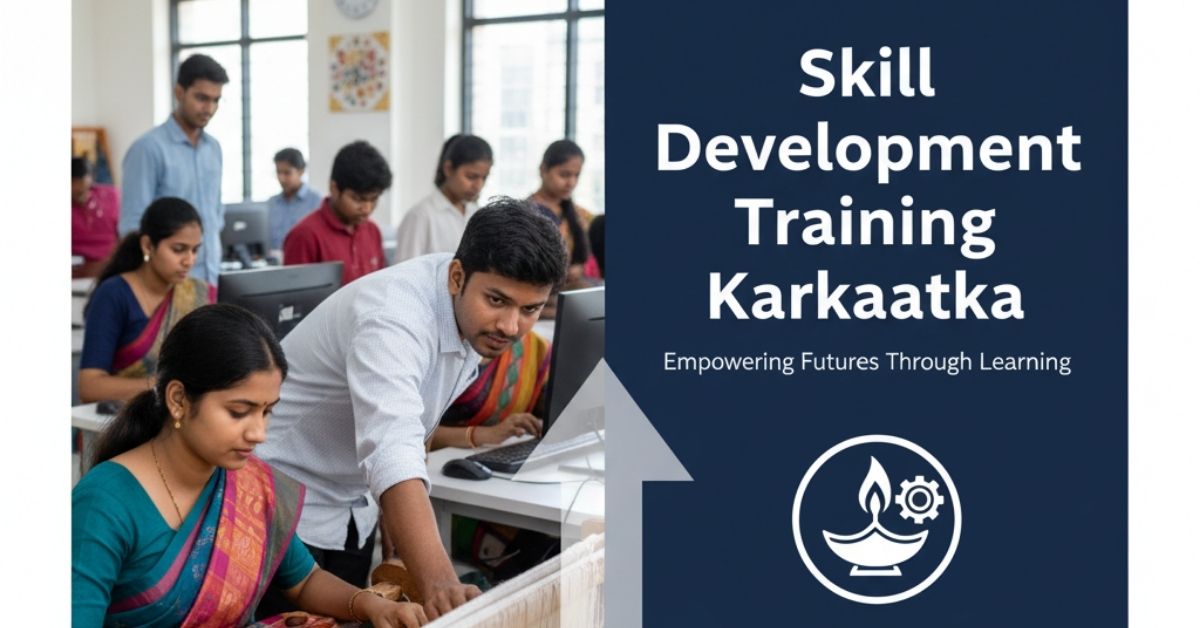
India is entering a time when skills, not just degrees, determine the value of education. Karnataka has become a leader in skill-based learning and workforce development in an economy that is rapidly changing due to automation, digitalization and global competition.
Through dedicated programs, world-class training centers and industry-aligned courses, Skill Development Training in Karnataka is helping lakhs of young people find jobs, start businesses and become financially independent.
This blog explains Karnataka’s skill development ecosystem — its goals, plans, benefits, industries covered, who can join, how to enrol and its long-term impact. It also highlights how learning can lead to empowerment.
1. Why Skill Development Matters Today
Education alone is no longer enough to secure employment. Companies and industries now expect candidates to have:
- Job-ready skills
- Real-world experience
- Technical + soft skills
- Ability to adapt to new technologies
A person may hold a degree, but without skills — especially for emerging industries — opportunities remain limited. Skill-based training fills this gap by:
- Making candidates ready for employment
- Preparing them for real-world industry needs
- Improving income and career growth
- Supporting entrepreneurship
Karnataka recognised this shift early and built a large-scale skill ecosystem so that no youth is left behind due to financial, academic or social limitations.
2. Overview of Skill Development Training in Karnataka
Karnataka runs numerous government-driven and industry-linked programmes that provide free or subsidised training, certification and placement support.
Key organisations include:
- Skill Development, Entrepreneurship & Livelihood Department (SDEL)
- Karnataka Skill Development Corporation (KSDC)
- Kaushalya Karnataka Mission
- Karnataka German Technical Training Institute (KGTTI)
- Industrial Training Institutes (ITIs)
- PMKVY (Pradhan Mantri Kaushal Vikas Yojana)
- University and polytechnic Skill Development Centres
- Corporate / industry partnerships for specialised training
The mission is to build a skilled, employable and future-ready workforce that succeeds in local, national and global labour markets.
3. Objectives of Karnataka’s Skill Development Mission
| Main Goal | Expected Result |
| Improve employability | Make youth job-ready through structured training |
| Strengthen entrepreneurship | Promote business establishment and self-employment |
| Support rural and urban talent equally | Reduce social and geographic skill gaps |
| Promote industry-aligned learning | Train based on market demand and new technologies |
| Empower women and marginalised groups | Inclusive growth and financial independence |
| Create a future-ready workforce | Skills for the digital economy and Industry 4.0 |
The Karnataka model focuses not only on training but also on certification, placement and career growth.
4. Major Industries Covered Under Skill Development Training
Skill development programs in Karnataka cover a wide range of fields to support diverse interests.
Traditional and Technical Fields
- Electrical and Electronics
- Civil and Mechanical
- Plumbing and Fitting
- Welding and Fabrication
- Automobile and Maintenance
- Construction and Masonry
Emerging and Digital Fields
- Artificial Intelligence & Machine Learning
- Cybersecurity
- Cloud Computing
- Robotics & Automation
- Software Testing
- IT & ITES
- Data Analytics
- Gaming & Animation
- Digital Marketing
Service & Hospitality
- Retail Management
- Tourism & Travel Services
- Food & Beverage Services
- Housekeeping & Hospitality
- Beauty & Wellness
Entrepreneurship-Oriented Skills
- Tailoring and Apparel Manufacturing
- Jewellery Making
- Food Processing
- Handicrafts and Handmade Production
- Baking and Home-based Culinary Businesses
Whether someone wants a corporate job, a technical job, overseas employment or a self-employment path, Karnataka’s training ecosystem provides opportunities for all.
5. Structure of Skill Development Training Programmes
Most programmes follow a stage-based training path:
Stage 1: Skill Identification
Courses are chosen based on:
- Interests
- Aptitude
- Market demand
- Long-term career goals
Stage 2: Classroom & Practical Training
Includes:
- Concept learning
- Hands-on training
- Workshops and lab sessions
- Soft skills and workplace etiquette
Stage 3: Assessment & Certification
Candidates undergo:
- Project review
- Viva / skill test
- Practical examination
Successful candidates receive industry-recognised certification.
Stage 4: Job / Entrepreneurship Support
After certification, candidates receive:
- Placement drives
- Job fairs & campus interviews
- Corporate recruitment
or - Entrepreneurial mentoring
- Access to business schemes and markets
6. Who Can Join Skill Development Training in Karnataka
Eligibility varies by programme, but most courses allow:
- Youth aged 18 and above
- 10th / 12th pass
- Graduates / Diploma holders
- ITI students
- Job seekers / unemployed youth
- Women restarting careers
- Persons with disabilities
- Individuals from rural or financially weaker backgrounds
Many courses do not require a degree or prior technical experience — only interest and willingness to learn.
7. Documents Needed for Enrolment
- Aadhaar card
- Passport-size photographs
- SSLC / PUC / Degree certificate (as applicable)
- Bank passbook (for stipend-linked schemes)
- Address proof
- Category certificate (if applying under reserved quotas)
8. How to Apply for Skill Development Training in Karnataka (Step-By-Step)
Although individual programmes have different registration portals, the general application process remains the same:
✔ Step 1: Explore Available Courses
Check government skill portals or visit local skill development centres.
✔ Step 2: Register Online or Offline
Fill in personal and educational details in the application.
✔ Step 3: Attend Counselling / Orientation
Officials help candidates choose the right training as per goals.
✔ Step 4: Begin Training
Training duration ranges from 1 month to 12 months based on the course.
✔ Step 5: Assessment & Certification
Candidates undergo skill tests to receive certified credentials.
✔ Step 6: Placement / Entrepreneurship Support
Eligible candidates get:
- Job placement support
or - Assistance to start businesses
Candidates can also walk into:
- District Skill Centres
- ITIs
- Kaushalya Karnataka Centres
- Polytechnic Skill Centres
for free guidance.
9. Special Focus on Women Empowerment
Karnataka places strong emphasis on women-centric skilling, including:
- Reserved seats for women
- Women-specific courses such as beauty & wellness, tailoring, fashion designing, digital careers etc.
- Women-exclusive training centres in select districts
- Support for home-based small business opportunities
For many women, these programmes lead to:
- Financial independence
- Confidence
- Social recognition
10. Benefits of Skill Development Training — For Individuals and Society
Benefits for Individuals
- Job-ready skills
- Better employability
- Industry-recognised certification
- Higher income opportunities
- Improved confidence and communication
- Ability to become self-employed
Benefits for Society
- Reduced unemployment
- Skilled workforce for industries
- Upliftment of marginalised groups
- Empowerment of women and rural youth
- Contribution to state economic progress
Benefits for Karnataka’s Industries & Economy
- Fast industrial expansion
- Higher productivity and innovation
- Better global competitiveness
- Strong MSME ecosystem
- Skilled manpower for overseas job markets
11. Real-World Impact of Karnataka’s Skill Mission
Karnataka’s skill development model is based on a demand-driven approach rather than a supply-driven one.
Training is provided only for skills that industries currently need, resulting in:
- Better job placements
- Higher starting salaries
- Lower dropout rates
- Faster absorption into industry
Sectors such as Bengaluru’s tech industry, the automotive sector, construction, hospitality and healthcare frequently hire candidates from government training programmes — proving the success of the skilling ecosystem.
12. Challenges and Future Opportunities
| Current Challenge | Proposed Solution |
| Low awareness | Stronger outreach in rural areas |
| Skill–job mismatch | Regular curriculum updates |
| Dropouts due to travel | Hybrid / online skill learning |
| Limited global job placements | International employer partnerships |
Future goals for Karnataka include:
- Expanding digital and Industry 4.0 skills
- Promoting global job readiness
- Supporting youth-led startups and digital entrepreneurship
- Using AI for career mapping and personalised training suggestions
Conclusion
The future will not belong to the most educated — but to the most skilled.
The Skill Development Training ecosystem in Karnataka has proven that with proper training, industry collaboration and government support, even an unemployed youth, homemaker, rural learner or dropout can build a respected and income-generating career.
Today, learning is not just a path to employment — it is a path to empowerment, confidence and financial freedom.